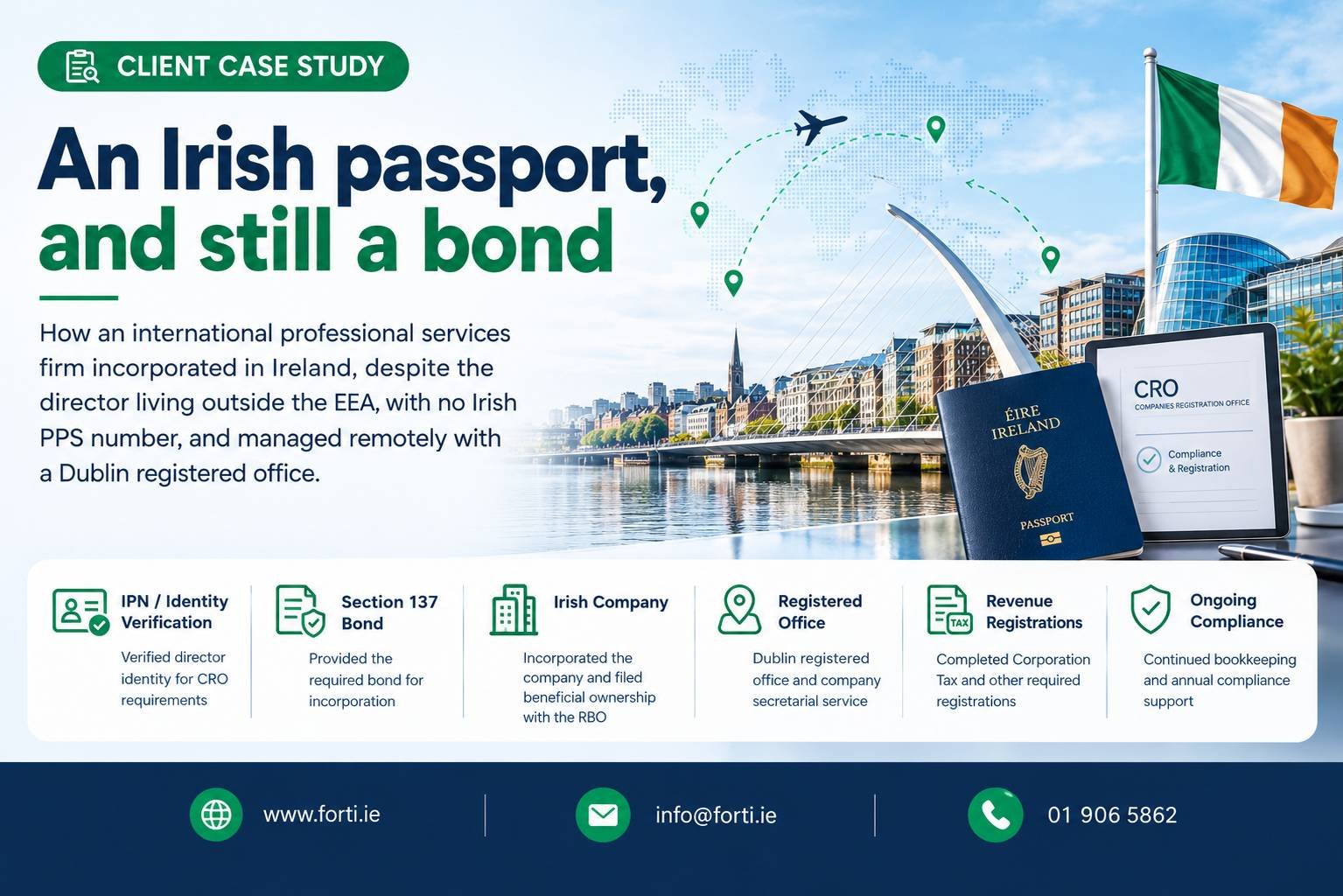

An Irish passport and still a bond

An Irish passport and still a bond

NON-EEA · PROFESSIONAL SERVICES

Client

Business type: Professional services

Location/market: Ireland / International

Business activities: International professional services; business being restructured from another European jurisdiction

Company structure: Irish company, with Dublin registered office and company secretarial services

Directors: One international director holding an Irish passport

Director residency: Outside the EEA

Challenge

An Irish passport and still a bond

WHAT WE DID

WHY IT MATTERED

The key issue was sequencing. Identity verification sits on the critical path, and an identifier that satisfies the CRO does not automatically resolve every downstream requirement. Establishing that at the start is what kept the whole engagement moving.

WHERE THEY ARE NOW

FAQs for this case study

If you live outside the EEA, an Irish passport does not by itself satisfy the EEA-resident-director requirement. The requirement is based on residence rather than citizenship — so an Irish passport holder living in South Africa, Dubai or Sydney does not meet it, while a Brazilian citizen living in Dublin does. It catches people out regularly, and it is worth establishing at the very start because it affects both cost and timeline.

An Identified Person Number is an identifier issued by the CRO where a director does not have an Irish PPS number. The current Form VIF must be completed and witnessed in accordance with the CRO’s identity-verification requirements before it is submitted to the CRO. For overseas directors this normally means arranging the witnessing in their country of residence. We send you the current version of the form and guide you through it.

An IPN is a CRO identifier — it does not become a PPSN. The company’s tax registration is handled separately with Revenue, and where a director needs to be identified personally for Revenue or payroll purposes, further identification can be required. In practice this means the CRO and Revenue steps can run in sequence rather than together, so it is worth telling us at the outset.

Yes, and many of our clients do. It is worth thinking about where the company is genuinely managed from, because that can affect its tax position. We raise it at the start rather than at the first Corporation Tax return.

No, though it needs care. Existing registration documents are useful to have to hand, and the sequencing matters — particularly around VAT registrations and when trading transfers across. It is worth a conversation before anything is filed.

Why This Case Study Matters

Still have questions? 

If you’re facing financial and tax challenges or need support with business closure, Forti Accountants is here to help! Contact us today to ensure your bookkeeping and compliance are in good hands.

Get Started

    Get Started