Problems to Fix Before You Reapply
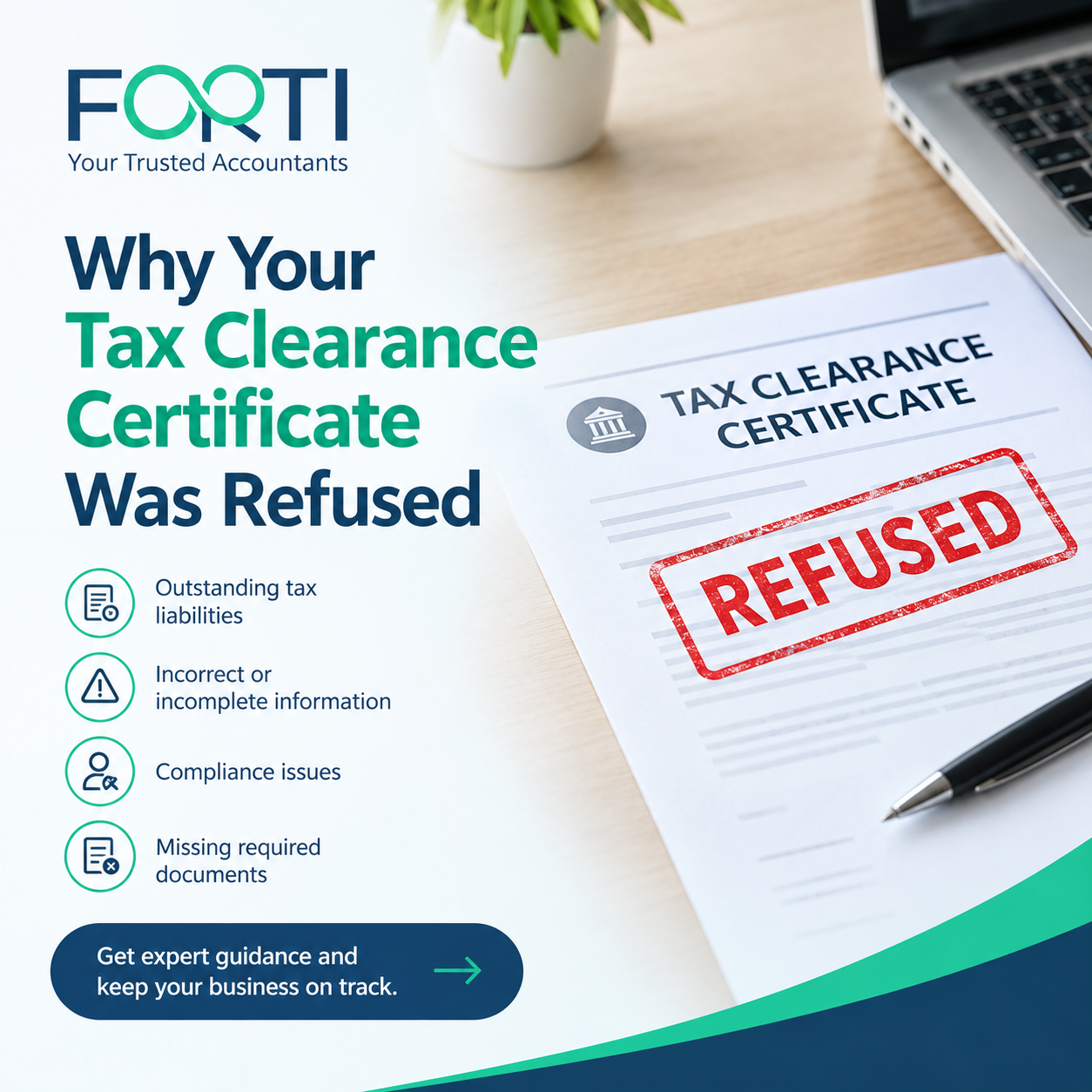
A refused Tax Clearance Certificate can stop a grant application, delay a public-sector payment or hold up a licence renewal. The useful part is that an online refusal normally tells you what Revenue found. A Tax Clearance Certificate is a confirmation that your tax affairs are in order. Revenue also checks certain people, entities and properties connected to you, so the problem may sit somewhere you were not expecting.
Do not keep submitting the same application and hoping for a different result. Read the refusal reason, trace it to the tax head or connected party involved, correct the underlying issue and then submit a fresh eTax Clearance application.
This guide explains the refusal points that matter most for Irish sole traders, company directors and SMEs, including overdue returns, unpaid liabilities, Local Property Tax, connected persons, payment arrangements and appeals.
Start With the Refusal Reason Revenue Gave You
When an online application fails, the refusal screen gives the reason. Save or print that result before doing anything else. You can also return to Manage Tax Clearance in ROS or myAccount to view the outcome later.
A refusal is different from an application that is under review. Revenue may place an application under review where it needs to examine the position manually, including cases where you are paying tax under a Phased Payment Arrangement. An application under review has not yet been refused.
If the status says under review, Revenue directs applicants to the Collector-General’s Division for queries. Have your Tax Reference Number or application reference ID available.
What Revenue Means by Having Your Tax Affairs in Order
Revenue’s tax-clearance focuses on current compliance rather than a general judgement about whether a business is well run. The eTax Clearance system looks for problems such as unfiled returns, unpaid liabilities and compliance issues linked to relevant connected persons or properties.
For a trading business, that can pull in several tax heads at once. Corporation Tax, VAT, PAYE, Income Tax and Local Property Tax can all matter depending on how you trade and what assets or registrations sit behind the application.
Missing Returns Can Block Clearance Even Before Payment Is Considered
A business may have enough cash to settle its tax bill and still fail tax clearance because a return has not been filed. A late CT1, VAT3, PAYE submission or Income Tax return leaves Revenue without a complete compliance record for the period concerned.
This is easy to miss after a quiet period. A company may have stopped trading, changed accountant, moved bookkeeping software or assumed a return was not required because little or no tax was due. The filing obligation can still exist.
For limited companies, keeping annual accounts and Revenue filings current is part of the wider compliance workload. Our annual compliance information sets out the types of recurring filings businesses commonly need to manage alongside tax payments.
Outstanding Tax Does Not Always Mean an Automatic Refusal
Tax debt needs more care because the position is not simply “debt equals no certificate”. Tax clearance may issue where arrears are covered by an instalment arrangement. At the same time, an application may require manual review when a Phased Payment Arrangement is in place.
So the question is therefore whether the liability has been dealt with in a way Revenue accepts and whether you are keeping up with both the arrangement and current taxes as they fall due.
If you need a PPA, Revenue’s current application rules require total outstanding debt of more than €500, all tax returns due to be filed, no existing PPA and an agreement to pay current taxes on time. Revenue may ask for supporting material such as bank statements, a six-month cash-flow projection and management accounts.
Ignoring payment demands is a poor route out of a clearance problem. Unresolved debt can move into enforcement, including sheriff action, solicitor referral, attachment of bank accounts or debtors, liquidation or bankruptcy. Also, late payment carries interest.
Local Property Tax Can Be the Issue Even When the Business Taxes Look Fine
Local Property Tax is a common blind spot because business owners often check ROS for VAT, PAYE or Corporation Tax and stop there. LPT non-compliance can cause an online tax-clearance application to fail.
- an outstanding LPT return for a property you own
- unpaid LPT liabilities
- a link to a property you previously owned
- a missed payment under an agreed LPT payment arrangement
This can be especially confusing after a property sale. If Revenue’s records still associate you with a previous property, the tax-clearance failure may appear unrelated to the company or trade that prompted the application. Check the property record rather than repeatedly reviewing only your business tax heads.
Your Own Tax Record May Not Be the Problem
Revenue reviews connected persons as part of tax clearance. A connected person can be an individual, an entity or a property. The exact checks depend on whether the applicant is an individual, partnership or company.
This is one of the reasons a director can look at the company’s ROS account, see no obvious unpaid Corporation Tax or VAT and still receive a refusal.
Company Applicants Have Specific Connected-Person Checks
For a company application, Revenue says it will check certain connected parties, including any director holding more than 50% of the company, any shareholder holding more than 50%, properties, partnerships of which the company is a member and certain previous business entities linked to a transferred liquor licence.
Revenue also checks the VAT compliance of the remitting company where the applicant is a VAT-group non-remitter. This is fairly specialised, yet it matters because one company’s VAT position can affect another company’s clearance application inside the same VAT group.
Individuals and Partnerships Have Different Connections
For an individual application, Revenue may review your properties and partnerships, among other specified links. A partnership application brings the partners and properties into the review. Revenue lists these partnership checks separately.
Be keen on the details shown on the ‘Review your details’ screen. Revenue places responsibility on the applicant to correct or update connected-person information where the record is inaccurate.
The Refusal Problems Worth Checking First
The refusal message should lead the investigation. Still, several problems recur often enough that they deserve an early check.
| What may be wrong | What to do next |
|---|---|
| Overdue tax return | File the missing return and deal with any liability created by it. |
| Tax debt with no accepted arrangement | Pay the amount due or discuss a Phased Payment Arrangement with Revenue where appropriate. |
| Current taxes falling behind during a PPA | Bring current obligations up to date. A payment plan for old debt does not replace current compliance |
| LPT return or payment outstanding | Correct the property record, file the return and settle the amount due or follow the applicable payment process. |
| Connected director or shareholder issue | Identify the connected person shown by eTax Clearance and correct the compliance problem on that record |
| Old registration or property link | Update Revenue’s records where the connection is no longer accurate. |
| VAT-group issue | Check the remitting company’s VAT compliance where the applicant is a non-remitter in a VAT group |
What to Do if the Refusal Mentions Section 1094 or 1095
Some refusal screens state that the applicant has not met the requirements for tax clearance under Section 1094 and, or 1095. Revenue specifically tells applicants with this message to contact the Collector-General’s Division.
Do that before sifting for the cause. The section reference can sit behind several factual circumstances, and the fastest correction is usually to identify the exact tax head, amount, filing or connected-person issue Revenue is relying on.
What to Fix Before You Reapply
- Save the refusal details. Keep a copy of the screen or letter so you can work from Revenue’s actual reason.
- Check every relevant tax head. Review Corporation Tax, VAT, PAYE and Income Tax registrations that apply to you rather than checking only the tax that prompted the application.
- File missing returns before dealing with the application again. A zero or low liability does not make an outstanding filing disappear.
- Settle unpaid tax or formalise an accepted payment arrangement where that route is available. Keep current liabilities paid while older debt is being cleared.
- Review LPT separately. Property-related compliance can fail tax clearance even where the trading taxes are current.
- Check connected persons and properties in eTax Clearance. Correct inaccurate links and deal with genuine compliance problems attached to those records.
- Reapply after the underlying record has been corrected. Revenue’s online guidance says a fresh eTax Clearance application is needed after the outstanding issues have been addressed.
For a limited company, the exercise may reveal wider bookkeeping or filing gaps rather than a single isolated tax-clearance error. Regular limited-company accounting and compliance work reduces the chance of discovering those gaps only when a tender, grant or licence depends on a valid certificate.
If You Need Tax Clearance for a Grant or Public Contract
Tax clearance often becomes urgent because money or an application is waiting on it. It is required where grants, subsidies or similar payments from a Government Department or public authority exceed €10,000 during the year. For public-sector contracts, the threshold is payments of more than €10,000 including VAT during the year.
A construction contract has an additional RCT point. Revenue says the contractor also needs an RCT rate of 0% or 20%, checked when the contract is due to be paid.
Where a deadline is close, concentrate on the refusal reason first. Sending a second application before the record has updated can cost time. If a payment arrangement or manual review is involved, contact the Collector-General’s Division rather than assuming the online status will change immediately.
You Can Appeal a Refusal in the Right Circumstances
A refusal can be appealed. Revenue gives a 30-day appeal period from its written communication refusing or withdrawing tax clearance. Before appealing, any tax or duty that is due and is not itself disputed or under appeal must be paid.
There is an important limit. The right to appeal a tax-clearance refusal does not create a right to appeal an unpaid tax or duty merely because that unpaid amount caused the refusal. The underlying tax dispute has to follow the appeal route that applies to that assessment or decision.
The Tax Appeals Commission accepts a Notice of Appeal online or in writing and normally applies the same 30-day time limit stated in the Revenue decision letter. If you are considering an appeal, read the refusal letter closely and identify exactly what decision you disagree with.
Most straightforward refusals are better solved by fixing the compliance issue and reapplying. An appeal is more relevant where you believe Revenue has made a decision that is factually or legally wrong and you have an appealable ground.
Getting the Certificate Does Not Freeze Your Compliance Position
Electronic tax clearance is not a one-off check that Revenue ignores until expiry. The eTax Clearance system checks certificate holders regularly and a Revenue official may reassess a case as part of compliance work. A certificate can be withdrawn if your tax affairs or those of connected parties fall out of order.
For grant applications, the certificate expires after one year. In other cases, the stated expiry period is four years. Those periods do not protect a business from withdrawal during the life of the certificate if compliance changes.
Tax Clearance Refusal Questions Businesses Commonly Ask
A. Possibly. Tax clearance may issue where arrears are covered by an instalment arrangement. A PPA can also lead to an application being placed under review. The arrangement needs to be accepted and current taxes still need to be dealt with as they fall due.
A. Revenue’s eTax Clearance system provides the refusal reason when an online application is unsuccessful. Save that information and match it to the relevant tax account, property or connected person.
A. Yes. Revenue lists links to a property previously owned by you among the circumstances that can cause LPT-related tax clearance failure. If the record is outdated, correct the property details. If there is an outstanding LPT obligation, deal with that first.
A. It can. For a company application, Revenue checks a director who holds more than 50% of the company and a shareholder who holds more than 50%, along with the other connections listed in its guidance.
A. Reapply after the underlying issue has been corrected and Revenue’s records reflect the change. Where a case involves manual review, a PPA or an unclear Section 1094 or 1095 message, contact the Collector-General’s Division first.
Fix the Compliance Problem Before the Application
A tax-clearance refusal is usually part of the issue. The crucial bit is identifying the return, liability, property record, payment arrangement or connected party that caused it.
Work from Revenue’s refusal reason, correct that record properly and then submit a fresh application. If the refusal is based on a decision you believe is wrong, the appeal clock is short, so the 30-day deadline deserves immediate attention.